Homeowners use "inspection" and "testing" interchangeably. They're different services with different deliverables. Knowing which one you actually need saves money and avoids over-diagnosis.
Mold inspection = visual + moisture assessment
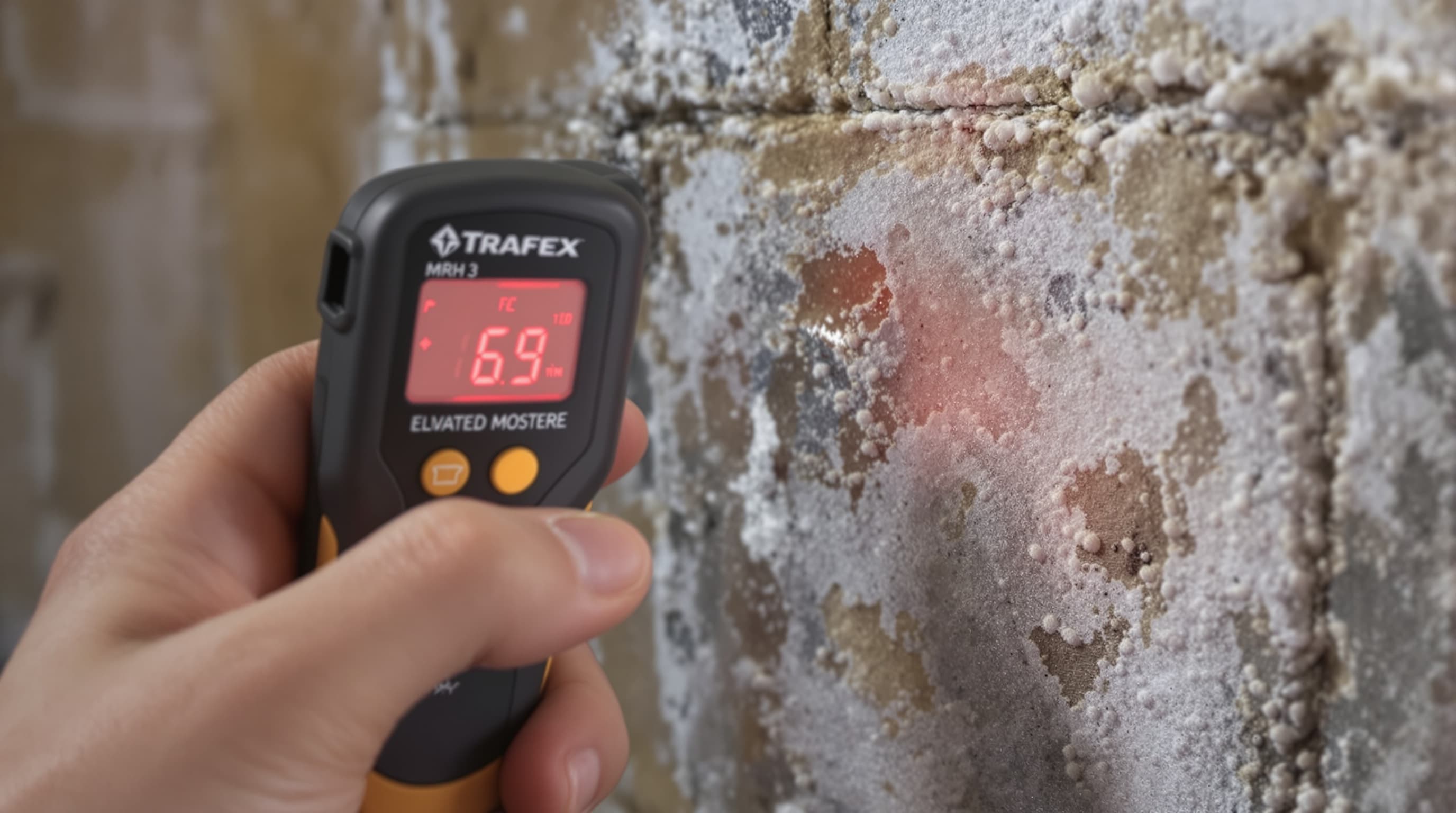
An inspection is a licensed assessor on-site with a moisture meter, thermal camera, and written protocol. They look at suspect areas, measure water activity in wall/ceiling/floor surfaces, document visible growth, and recommend a remediation scope if needed.
- Deliverable: Written report with photos, moisture readings, and scope recommendations
- Time on site: 60–120 minutes
- Typical cost range: $300–$600 (varies by home size)
- When you need it: Before buying a home, after a water event, when you see or smell mold
Mold testing = lab-processed samples
Testing is sample collection — air cassettes, surface swabs, tape lifts, bulk materials — sent to an AIHA-accredited lab for species identification and spore counts. The lab report plus the sampling context answers: what species, how much, and how does indoor air compare to outdoor baseline?
- Deliverable: Lab report with species, spore counts, indoor-vs-outdoor comparison
- Time on site: 30–60 minutes for sample collection
- Typical cost range: $450–$950 (depends on number of samples)
- When you need it: Health investigation, legal disputes, post-remediation verification, species-specific concern
Decision tree
You have visible mold and know the cause
Skip testing. Hire an assessor for the inspection, then a separate remediator for the work. Testing doesn't change the remediation plan when mold is visible and the water source is obvious.
You smell mold but can't find it
Start with inspection. The assessor uses thermal imaging and moisture mapping to locate hidden growth. Testing gets added only if the inspection can't localize the source.
Someone in the home is sick and you suspect mold
Do both. Inspection identifies physical sources; air testing quantifies exposure. Compare bedroom samples to unaffected rooms and outdoor baseline to document the health-risk profile.
You're buying a home with a past water event
Inspection is mandatory. Add testing if the inspection reveals hidden cavities or inconclusive moisture readings. On pre-purchase work, testing is cheap insurance against discovering mold post-close.
Post-remediation clearance
Testing is the verification — specifically air sampling (indoor vs. outdoor ratio) and visual verification by a third party. Inspection alone is insufficient for PRV.
What NOT to do
- Don't skip inspection and jump straight to testing. Samples without context are meaningless numbers.
- Don't let a remediator do your pre-remediation inspection on the same property. NY law prohibits it, and the conflict of interest inflates scope.
- Don't rely on DIY home-depot mold test kits. They produce spore-count numbers with no baseline or interpretation, which creates false alarms and missed real problems.
Cost combined
If you need both services, expect $750–$1,500 total on a typical LI residential job. Insurance occasionally covers both when a documented water event triggered the investigation. Get it in writing from your adjuster before paying.
Need help with your specific situation?
We do free on-site assessments across Long Island.
NYLMB-licensed, IICRC-certified, insurance-experienced. Call (631) 625-8807 or request an estimate online.