 Crawl Space Mold
 Commack, Suffolk County Mar 12
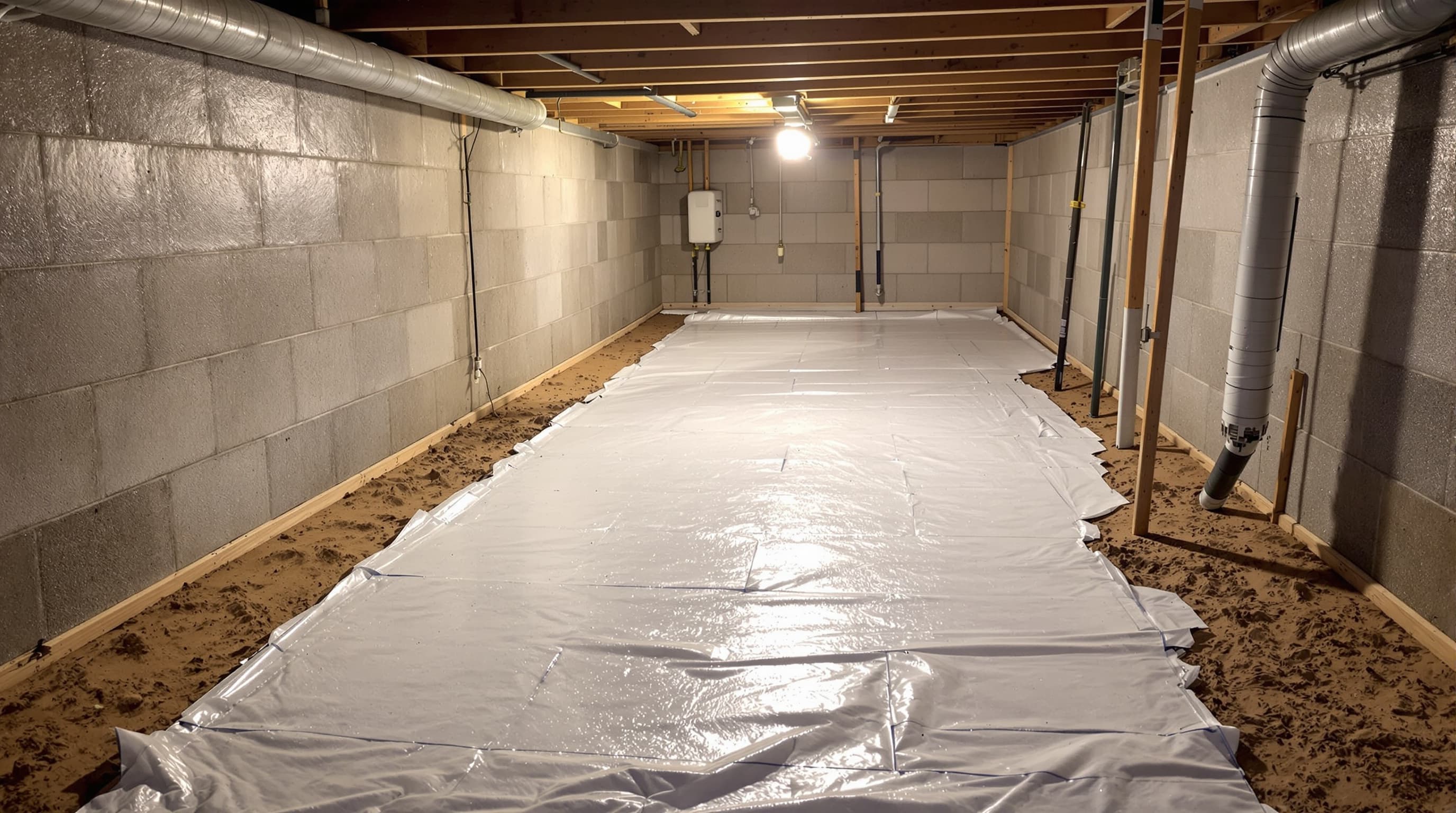
1962 ranch crawl space, 900 sqft. Dirt floor + no vapor barrier = chronic humidity. Installed 10-mil reinforced vapor liner, treated joists, added dedicated dehu.
Remediation Service
Vapor barriers, joist treatment, dehumidification — the three-step fix for chronic crawl-space mold in older LI homes.
Free Inspection Request
Overview
Crawl spaces are where Long Island mold hides. A dirt-floor crawl with no vapor barrier bleeds ground moisture into the joists year-round. Add a cold winter and you get frost on the floor sheathing above. We see this most in 1950s–70s Suffolk ranches and older South Shore homes. The fix is boring: seal the ground, treat the framing, install a dedicated dehumidifier. But it works permanently.
Thermal imaging + moisture readings. Humidity meter at multiple zones. Photographic record of joist and foundation-wall conditions.
For crawls with active Stachybotrys or significant growth (over 30 sqft), we set up poly containment at the access hatch with negative-air machines vented outside. HEPA AFDs run continuously during work. Crew in Tyvek suits and half-face respirators minimum — full-face for confirmed black mold. This keeps spores out of the living space above during demolition and treatment.
Before and during treatment, HEPA air scrubbers run in the crawl at a minimum of 4 air changes per hour. This captures airborne spores that lift during sanding and demolition. Air exits through exterior venting — never recirculated into the occupied space. We leave scrubbers running for 24 hours post-treatment.
HEPA-vacuum joists and subfloor, sand visible growth to bare wood, apply EPA-registered antimicrobial (Concrobium Mold Control or Sporicidin) per manufacturer dwell-time spec. Encapsulation coating on heavily-affected framing. Any insulation that is wet, compressed, or visibly colonized comes out — it cannot be dried in place reliably.
Second antimicrobial coat on all treated surfaces. Then: 10-mil reinforced polyethylene vapor barrier on the dirt floor, sealed to foundation walls with mastic and mechanical fasteners. Closed-cell spray foam on the rim joist. No soil moisture evaporating into the framing ever again.
After treatment and sealing, we do a final humidity check — target under 55% RH inside the sealed crawl. For jobs over 30 sqft or with confirmed Stachybotrys, we recommend post-remediation verification (PRV) air samples compared to an outdoor control. Lab results in 3–5 business days. If clearance fails, we re-treat at no additional cost.
The simplest and most common cause. Dirt floor crawl spaces on Long Island constantly evaporate soil moisture. Without a vapor barrier, you're essentially running a humidifier under your house.
Vented crawls were standard 1950s–70s. Theory was 'let outside air in to dry things out.' Reality: summer humid air condenses on cool crawl surfaces. Modern building science closes crawls and adds a dehumidifier.
Sandy and subsequent nor'easters pushed ground water into crawls that never properly dried. Insulation stays wet, joists stay damp, mold colonizes.
Full crawl-space fix (treat + seal + foam + dehu) usually $2,500–$5,500 depending on square footage. Just treat + seal is $1,800–$3,500. Vapor barrier alone is $800–$1,500.
Every quote is fixed after inspection — no hourly billing, no change orders unless the substrate reveals hidden contamination.See full pricing guide →
Field Log
Real jobs. Real towns. Actual scope and scale from our last 90 days of field work.
Crawl Space Mold1962 ranch crawl space, 900 sqft. Dirt floor + no vapor barrier = chronic humidity. Installed 10-mil reinforced vapor liner, treated joists, added dedicated dehu.
 Crawl Space Mold
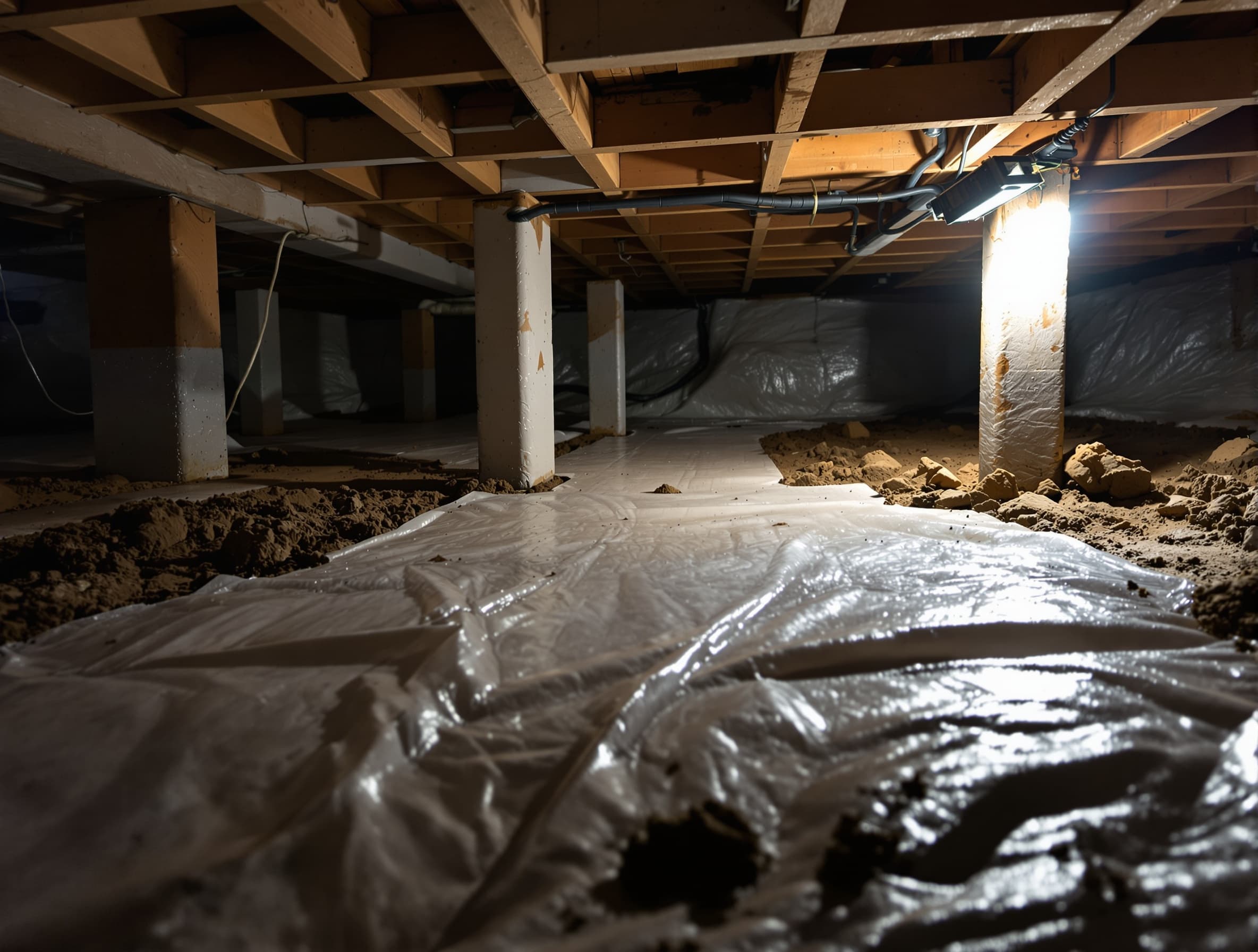
1950 bungalow crawl, standing water. Pumped out, spray-foam rim joists, treated joists, vapor liner. Stabilized humidity at 52%.
FAQ
More services
Full IICRC S520 remediation — containment, HEPA filtration, removal, and clearance. Our core service. Long Island's housing stock — 1950s–70s construction with limited vapor barriers, poor attic ventilation, and South Shore flood exposure — creates persistent mold conditions that require professional remediation, not surface cleaning. We follow Category 3 containment protocol on every job: negative-air machines with HEPA filtration, zipper-door decontamination chambers, full PPE, and independent post-remediation verification (PRV) clearance before we close out. South Shore towns like Freeport, Merrick, and Valley Stream carry elevated mold risk from storm surge flooding. Nassau County Health Dept guidelines for mold remediation in occupied buildings require written scope, proper containment, and clearance testing on jobs over 10 sqft — we document every step for insurance and compliance purposes. Most residential remediation projects in Nassau and Suffolk run $2,000–$8,000. Post-flood jobs in South Shore towns can run $3,000–$12,000 depending on scope.
Read more →
Emergency Stachybotrys removal with negative-air containment, respirator-grade crew, and PRV clearance testing.
Read more →
The #1 mold problem in Long Island homes — sheathing mold from blocked bath fans and under-vented roofs. We treat the wood and fix the ventilation.
Read more →
From crawl-space dampness to finished-basement flood damage. South Shore specialty — Sandy legacy and nor'easter water events.
Read more →
Hidden behind tile, under vanities, and inside wall cavities — most bathroom mold comes from pinhole leaks that have been wet for years.
Read more →
Category 3 water protocol — Sandy legacy cleanup, storm floods, basement nor'easter events. Insurance-documented from day one.
Read more →
Ready to breathe easier?
Free visual inspection, same-day estimate. Licensed assessor handles the test separately from remediation — NY Article 32 compliant from the first call.
Mon–Sun 7am–8pm · 24/7 emergency line