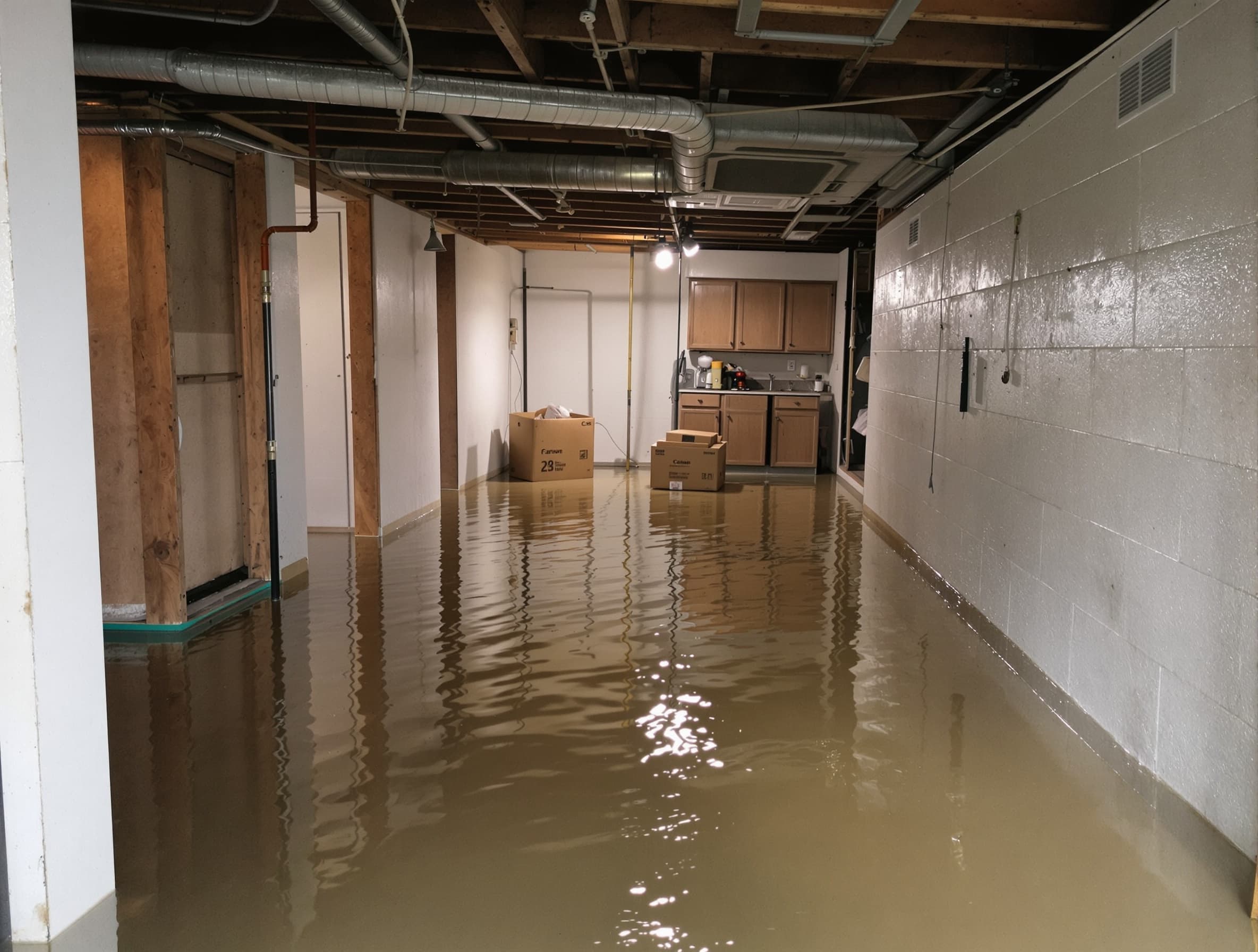
When a nor'easter pushes water into your Nassau County basement, the clock starts immediately. Mold colonization begins on wet organic materials — drywall, wood framing, insulation, carpet backing — within 24 to 48 hours. By the time the flood cleanup crew finishes and you start thinking about what comes next, the window for easy mold prevention may already be closing.
Nassau County's housing stock makes this especially urgent. Most of the 1950s and 1960s construction — split-levels in Levittown, ranches in Massapequa, capes in Hicksville and Westbury — was built without modern vapor barriers and with finished basement additions added decades later. When those materials get wet, they hold moisture far longer than newer construction, and mold takes hold faster.
The 72-hour action window
0–12 hours: extract water and start drying
Get standing water out as fast as possible. If you have a sump pump, verify it's running and the discharge line is clear. For more than a few inches of water, a water extraction company with truck-mounted units can clear a finished basement in 1–2 hours. Do not wait for morning.
- Run dehumidifiers continuously — aim for indoor RH below 50%
- Open windows and run box fans if outdoor air is dry; close them if it's humid outside
- Remove saturated carpet, padding, and area rugs immediately — they cannot be dried in place
- Pull baseboards and bottom 12 inches of drywall if water wicked up the wall
12–48 hours: assess for hidden moisture
Surface drying is not enough. Water migrates into wall cavities, under flooring, behind built-ins, and into the subfloor within hours of intrusion. A moisture meter reading on the surface of a dry-looking wall can show 18% WME while the backside of the drywall is at 40%+. This is where most Nassau County mold problems originate — finishes that look fine on the surface but have wet framing behind them.
48–72 hours: get a moisture assessment
If you have any doubt about whether materials dried completely — and in a Nassau County basement flood, you should have doubt — call for a NYLMB-licensed moisture assessment within 72 hours. A licensed assessor uses thermal imaging and moisture meters to map water migration through wall cavities, floors, and framing. The assessment report documents which materials are salvageable and which need to come out. This is the step that determines whether you have a $2,000 problem or a $10,000 problem.
When professional mold remediation is required
New York law requires a licensed mold remediation contractor for any project affecting more than 10 square feet. For a typical Nassau County basement flood, that threshold is usually crossed. Professional remediation includes: containment, HEPA-filtered negative air, demo of affected non-salvageable materials, antimicrobial treatment of framing, structural drying to target moisture levels, and post-remediation verification clearance testing by an independent assessor.
Insurance considerations for Nassau County flood events
Standard homeowners policies (HO-3) do not cover exterior flooding — that requires a National Flood Insurance Program (NFIP) policy. However, if the water entered through a failed sump pump, a backed-up drain, or a plumbing failure, that may be covered under your standard policy. Document everything before any cleanup: photos with timestamps, water levels marked on walls, and notes on the source of intrusion. Insurance-documented remediation starts with the assessment report — we write cause-of-loss narratives that align with what adjusters expect to see.
- NFIP flood policies cover direct flood damage — available through FEMA
- HO-3 water backup riders cover sewer/drain backup — common add-on worth checking
- Mold remediation tied to a covered water event is often partially covered — ask your adjuster before starting work
South Shore Nassau: elevated flood risk areas
Homes in Massapequa, Merrick, Freeport, Baldwin, and Valley Stream face higher baseline flood risk from the bay and canal systems that run through the South Shore. These communities deal with storm surge on top of heavy rain — a combination that pushes water under doors, through window wells, and through foundation cracks that would otherwise hold dry. If your home is in a flood zone designation (check FEMA's flood map), pre-season basement inspection and a functioning sump system with battery backup are the two most cost-effective preventive measures available.
Need help with your specific situation?
We do free on-site assessments across Long Island.
NYLMB-licensed, IICRC-certified, insurance-experienced. Call (631) 625-8807 or request an estimate online.